


My father was the most racist person I knew as a child - he didn’t like black people, but also on his list were Indians and Greeks and Chinese, so it might surprise you when I tell you his best friend was a black woman.
Vonnie and my dad both worked at the phone company, in the city, back in the day when there was one phone company.
Their cubicles touched, and they often shared lunch together. When Vonnie was present at our family dinners, my father became unburdened. They laughed through stories of their coworkers and bosses.
Oh, BILL, Vonnie used to say after my father told a good joke, swatting the air toward him.
Vonnie's voice was strong and unyielding and melodic.
She had natural, beautiful teeth and swinging hips and stylish purses.
My mother didn't like anything that made my father happy, but she tolerated Vonnie, because my father simply wouldn't give her up like he gave up the saxophone and his boat and his love of fishing, and every year my mother announced to us your father’s black friend Vonnie is coming to dinner, and my brothers and I groaned.
After my father died, the letter I wrote to Vonnie wasn't short.
I spent time sharing my memories - how witnessing their friendship had a profound effect on my life. I shared with Vonnie my father's medical conditions and all his deferred dreams. I invited her to visit me anytime in California - it would be an honor to host her and her husband for dinner.
In the letter I apologized for my parents’ racism and my mother’s jealousy, for a world where I had to apologize for that, and how my father's example of their friendship spoke more to me than anything I had witnessed in our all- white small town.
Vonnie never never answered my letter - never called, never visited me in California, and I thought maybe I had poured too much of my heart onto the page, said too much, or was too honest with her. I thought I should have been more careful about my choice of words, or maybe I even had the wrong address.
And then I just let it all go.
A few years later I received a call from Vonnie's husband to tell me Vonnie had died. He said she read the letter I sent frequently, until it was so threadbare or had so many coffee stains on it, she had to make a copy.
I thanked him for calling me. I listened to his grief story, and held the end of Vonnie's life in my heart.
At the close of our call, I told him I thought she didn't receive the letter or didn't like it because she never responded. I felt vulnerable even saying it.
There was a long pause, and he said, Honey, that just wasn't Vonnie's way. But I wanted you to know.
I tell you this story today as a reminder that it’s important to reach out and speak our truth without expectation. We live in a world of likes and shares and followers, and we often use this to measure who we are as a writer, and who we are becoming.
Shhhh, shhhhhh, we can say to our need for validation, and trust the love and the words you put into the world will find the heart that needs them.
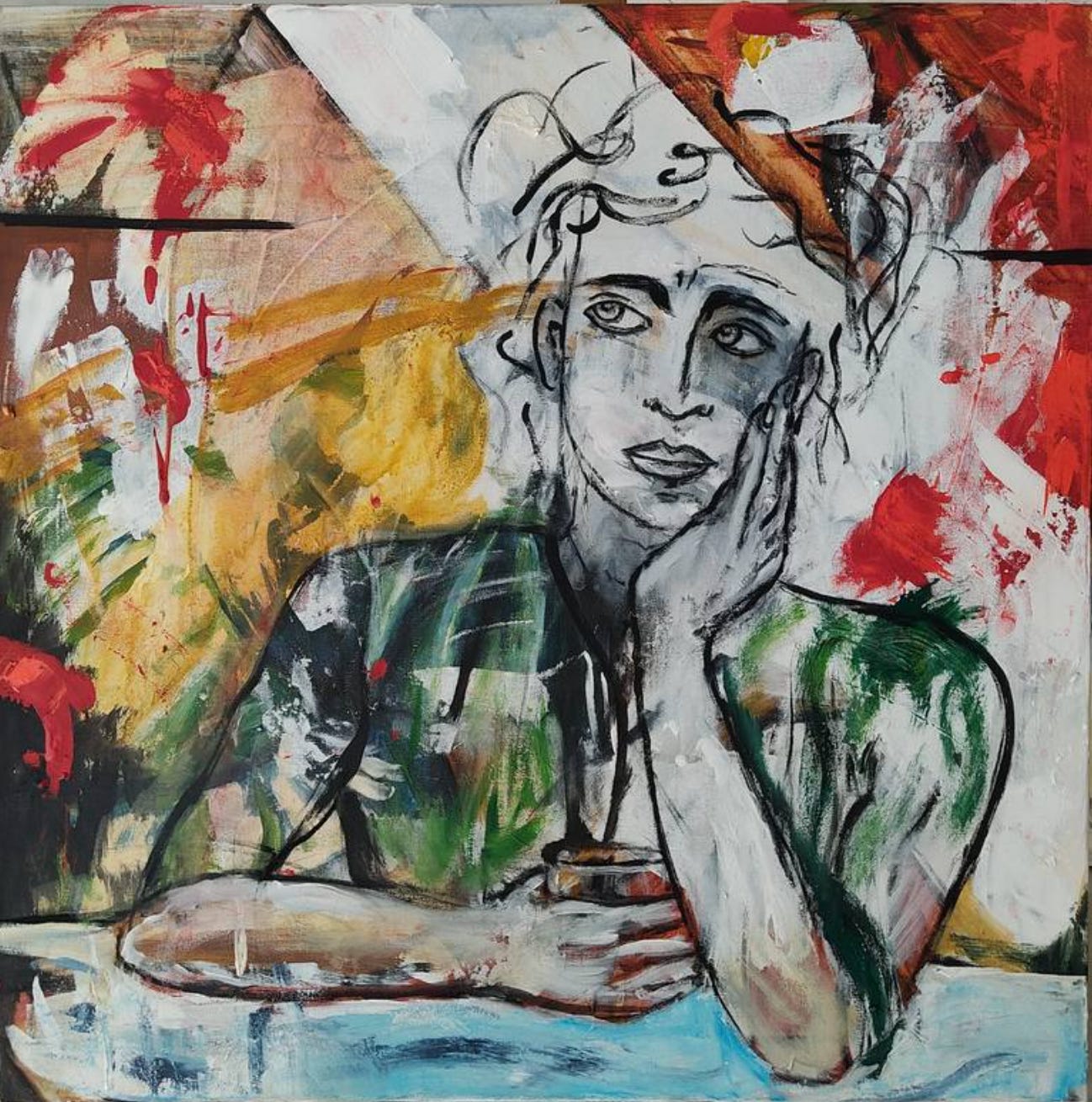
Art “Validation” by Carine Delimelette at Saatchi
Literati Academy is an international writing community founded by Laura Lentz. A version of this essay appears in Laura’s essay book Freeing the Turkeys and STORYquest, the Writer, the Hero, the Journey, a workbook for writers.
On Christmas Eve I sat in the hospital beside my elderly neighbour who was dying, until her son's arrived. She never knew I was there. But I did...
This story of your letter is so needed right now. Yes, yes and yes. We must challenge ourselves to be bold in our truth- do not postpone the things we want to say out of love and integrity. Now, more than ever, the world needs that energy released from us, even if it is one letter, one word, one gesture at a time.